A First Visit to a Community Dragon Boat Race
A first visit to a community dragon boat race is easier to enjoy when you know where to stand, what to watch at the start, and how to follow each crew.
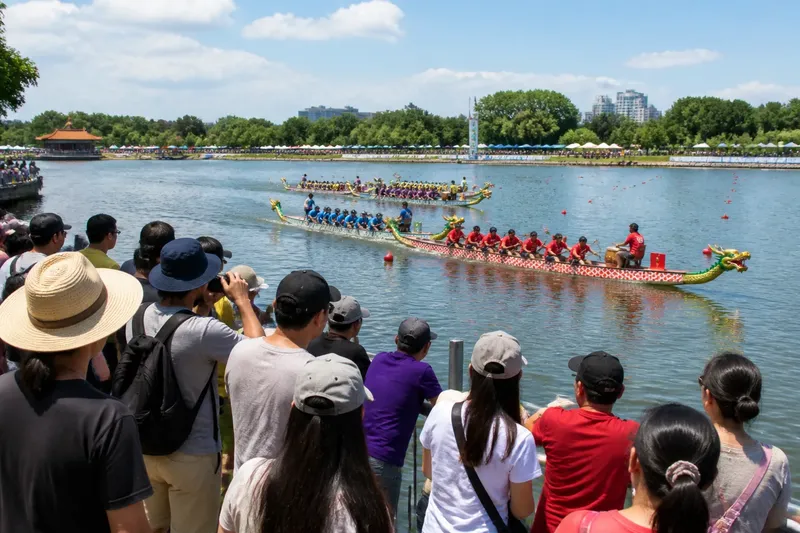
You arrive at a community dragon boat race just as a marshal asks spectators to move back from the water’s edge. The boats are lined up farther away than you expected, a speaker crackles, and the crews look like a blur of paddles and bright shirts. For a first visit to a community dragon boat race, a few simple viewing choices make the event easier to follow without specialist knowledge.
Choose a clear view of the dragon boat race course
A common first frustration is being unable to see the paddlers clearly. A course may stretch along a riverbank, lake, or sheltered harbor, while the crowd gathers near the easiest access point. That can leave you beside the finish or launch area while much of the racing happens farther away.
Before settling in, look for lane buoys, a marked start line, or a clear finish area. Choose a public spot where you can see several lanes and the direction of travel. A slightly elevated path or a bend in the shoreline may offer a better view than standing close to the dock. Stay in spectator areas and follow marshals’ directions.
Binoculars can help if you already own them, but they are not necessary. With an unobstructed view, it is often easier to follow the boats’ movement and shared timing than to pick out individual faces.
Choose your sightline before you choose the closest spot.
Follow crew roles without assuming where they sit
Dragon boats can carry a full crew, and a newcomer may try to watch every paddler at once. The result can be a jumble of rising and falling paddles, a surging boat, and no clear sense of who is setting the rhythm. Instead, focus on one role for a short stretch, then shift your attention.
If a boat has a drummer, watch and listen for the beat and notice how the paddlers’ strokes relate to it. The drummer’s position and the crew’s arrangement can vary, so look for the person making the rhythm rather than assuming they will be in a particular place. You can then follow the paddlers’ timing and look for the steersperson, who guides the boat; that person’s position and equipment may also differ by boat or event.
Say you are watching two crews from the bank and cannot tell which boat is moving more smoothly. First, follow the paddles and notice whether each crew enters and lifts them from the water in a coordinated pattern. Then track each boat against its lane markers. Those visible details offer something to follow without judging a crew’s strength or guessing at its strategy.
One role at a time is plenty.
Read the start from the action, not one universal call
Race starts can sound complicated from shore. Announcements may be hard to hear over conversation, and a boat may appear to move before you recognize a formal starting signal. The exact procedure and calls can vary by event, so treat the organizer’s instructions as specific to that race.
Watch for the practical sequence: boats are brought into position, crews settle, officials check readiness, and a signal begins the race. Keep your eyes on the start line and boats rather than trying to decode every announcement. If you arrive after the crews are positioned, look for an official’s gesture and the coordinated launch of paddling.
Not every movement means a race has started. Crews may be adjusting position, warming up, or returning from the course. If a schedule is posted, check it to distinguish a heat from practice or a break.
Watch the line, then the boats; the loudspeaker is only one clue.
Compare boats against landmarks and wait for the finish
From a fixed place on the bank, perspective can distort a race. A boat nearer to you may look faster, while a bend or shoreline angle can make lanes seem uneven. It is also tempting to call a winner before the boats reach the finish, especially if one crew appears to open a gap mid-course.
Follow the boats against a fixed landmark, such as a buoy or a building across the water. Compare their positions as they pass it, then keep watching through the finish. A crew’s pace can change, and the official result depends on the finish rather than what looks decisive from your viewing angle.
If you miss the finish, listen for the announcer’s result or check the event board if one is available. For the next heat, look for a public viewing area with a clearer view of the finish line, or ask a volunteer where spectators can watch.
Let the finish line decide the race, not your angle from shore.
Make a small plan for a busy race day
Community events may combine racing with music, food stalls, team gatherings, and announcements. Pick a manageable goal: see one start, follow one crew across the course, and watch one finish. That is enough to give the day a shape.
Arriving with time to find the course can help, but you do not need to watch every race. If you want to identify a boat, note its lane, color, or number when visible. Keep a program or phone schedule handy, and use a quiet interval to move rather than crossing in front of people during a race. If you are attending with children, agree on a meeting point away from the water and keep them within the marked spectator area.
Check the event’s guidance on seating, weather, and permitted items. Bring water and sun protection when appropriate, and leave room for other spectators to see. Venue rules about access, photography, and facilities depend on the organizer, so follow posted notices and staff instructions.
Make room for watching, not just moving through the event.
What should a first-time spectator watch for?
Where should I stand to see the race?
Look for a public area with a view of the course and, if possible, the finish line. Stay behind barriers and choose a place that does not block other spectators.
What does the drummer do?
If the boat has a drummer, that person provides a beat the paddlers can follow. Watch how the strokes relate to the rhythm without assuming the drummer sits in the same place on every boat.
How can I tell when a race begins?
Watch the start line for crews settling into position and an official signal, then look for the boats to launch. Calls and procedures differ between events, so use the visible action and the organizer’s announcements together.
Do I need to understand the rules to enjoy the event?
No. You can follow the crew’s coordination, the boats’ progress past landmarks, and the finish without knowing technical regulations. If a close result interests you, check the official announcement afterward.
Keep one detail in mind for your next visit
A first visit to a community dragon boat race becomes easier to follow when you settle on a simple task: find the course, watch one crew role, and keep your attention on the boats until they cross the line. You may remember the drummer’s beat, the rise and dip of paddles, or the crowd’s response as crews come ashore. If the crew layout is unfamiliar, follow what each person does rather than where they sit; that small adjustment makes the next race easier to read.